Enterprise Wi-Fi Audit, RF Optimization & Wireless Deployment
High-density office environments frequently suffer from wireless interference, co-channel congestion, and coverage dead zones caused by aging hardware and overlapping neighboring networks. This project involved executing a full RF site survey, redesigning wireless access point (AP) topology, and deploying modern cloud managed infrastructure to deliver seamless, secure, high speed Wi-Fi coverage.
The Challenge
The client experienced severe wireless degradation, dropped connections in key meeting areas, and persistent dead spots across their multi-tenant office building and adjoining warehouse facility.
Key technical and operational obstacles included:
RF Signal Clutter: Overlapping 2.4 GHz and 5 GHz signals from surrounding offices in a high-density commercial building causing co-channel interference.
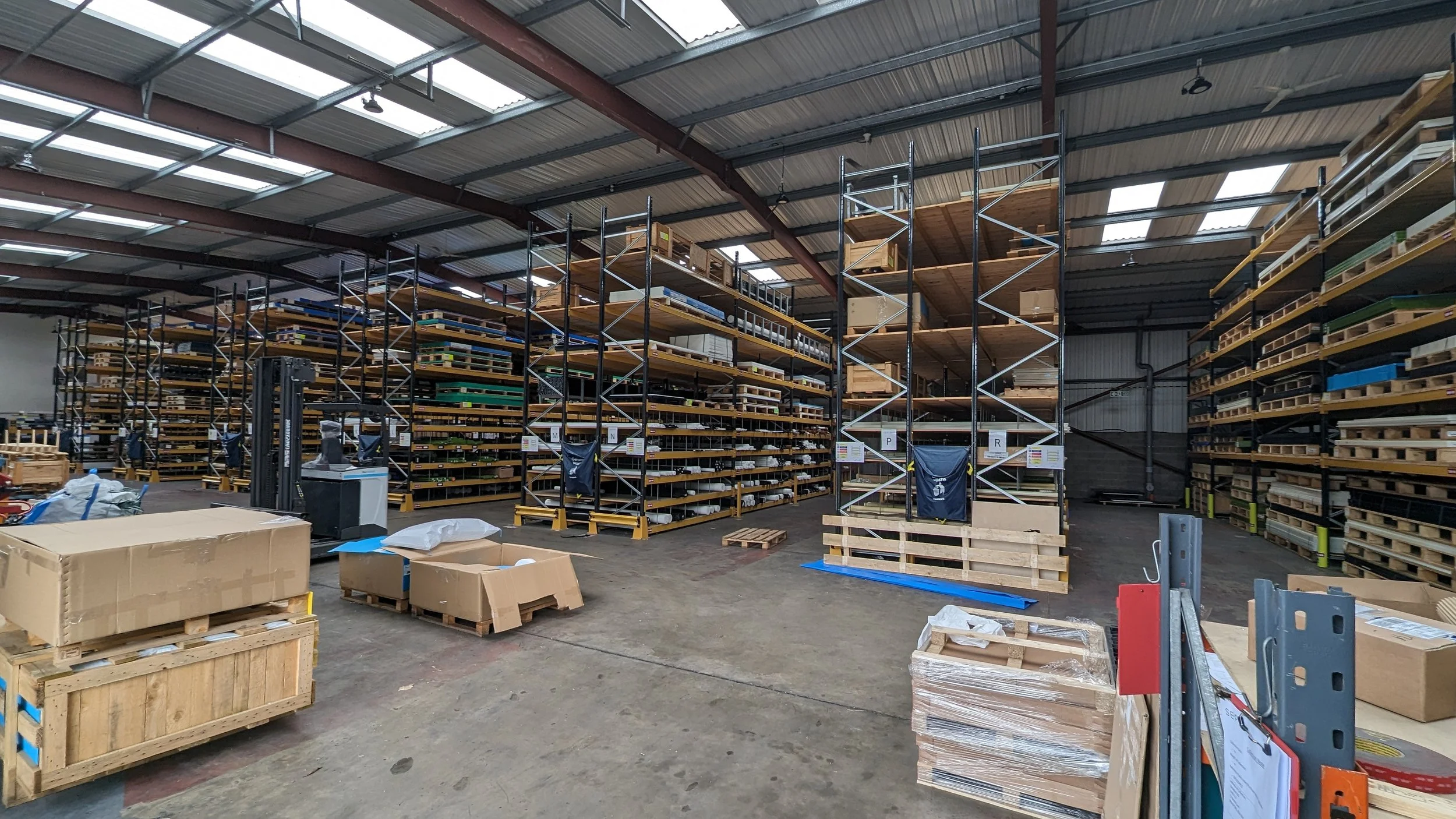
High-Ceiling Warehouse Environments: Installing infrastructure in active warehouse spaces where APs needed to be mounted at significant height to achieve line-of-sight coverage over high density racking.
Safety & Access Constraints: Reaching elevated mounting points safely without disrupting active warehouse logistics or compromising on-site health and safety regulations.
Legacy Hardware: Outdated, End-of-Life (EoL) access points struggling to handle modern device density and bandwidth demands.
Phase 1: On-Site RF Survey & Ekahau Analysis
To replace guesswork with precise data, I scheduled a comprehensive on-site survey timed to minimize disruption to daily business operations.
Spectrum & Density Audit: Using specialized survey software (Acrylic Wi-Fi Analyzer) and diagnostic hardware, I mapped both office floors and warehouse zones to assess signal propagation, noise floor, channel utilization, and RF interference.
Structural Attenuation & Dead Zone Mapping: Pinpointed low throughput zones caused by concrete/glass walls in the office and high density inventory/metal racking in the warehouse.
Heatmap Modeling: Generated detailed pre-installation predictive heatmaps to analyse signal strength (RSSI), signal to noise ratio (SNR), and optimal mounting elevations.
Phase 2: Design & Strategic Recommendation
Rather than simply adding more access points, which often worsens co-channel interference I designed a tailored wireless topology based on the survey data:
AP Optimization & Height Placement: Calculated exact AP count and mounting locations, identifying where to remove redundant units, reposition existing hardware, and place directional/omni APs in the warehouse for optimal down angle signal dispersion.
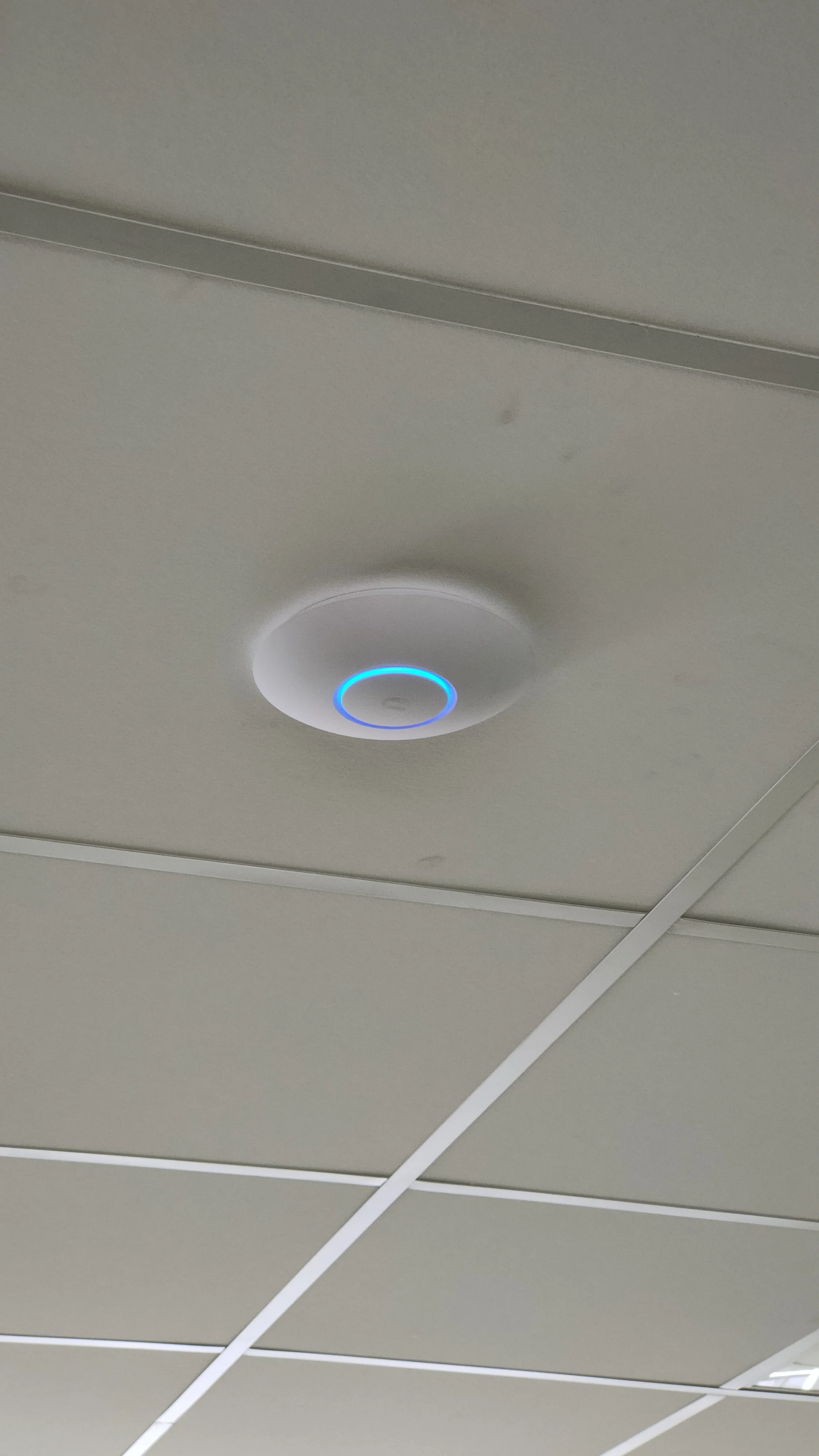
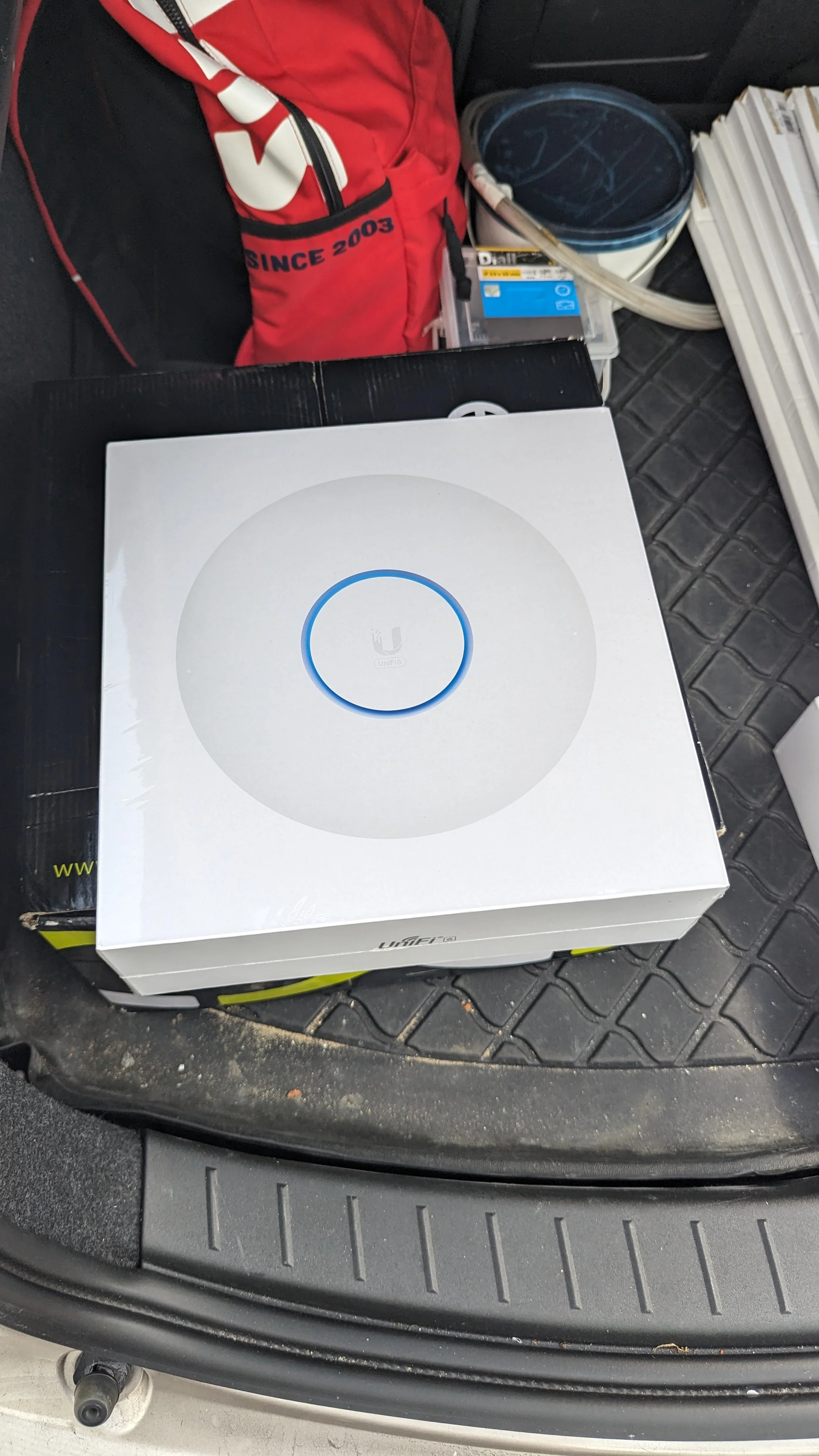
Hardware Selection: Recommended upgrading legacy hardware to enterprise grade cloud managed ecosystems utilizing Ubiquiti UniFi (or Aruba Instant On) for centralized cloud visibility, seamless client roaming, and remote management.
Channel & Power Planning: Designed a custom channel assignment and power-output schema to prevent channel overlap with adjacent business networks.
Phase 3: Specialized Deployment & Powered Access Operations
Physical installation required strict safety compliance alongside standard structured cabling work:
Licensed Powered Access (IPAF Certified): To safely access high ceiling warehouse mounting locations, I utilized a scissor lift to install APs and run overhead cabling. Holding an IPAF certification, I personally operated the scissor lift in compliance with strict site safety regulations and working at height standards.
Structured Cabling & Mounting: Ran CAT6 Ethernet drops to elevated positions, securing APs safely to overhead steel work and drop ceilings for optimal coverage.
Network Provisioning: Configured the centralized cloud management portal (UniFi Network Controller / Aruba Portal) to adopt, update, and manage all hardware from a single dashboard.
VLAN & SSID Segmentation: Implemented secure network isolation by mapping distinct SSIDs to dedicated VLANs: Guest network / Business / IoT etc.
Corporate Internal: Encrypted WPA3 access for staff devices with full local network resource access.
Warehouse / Handheld Scanner Network: Dedicated, high availability SSID for warehouse inventory handhelds.
Guest Network: Isolated VLAN with bandwidth throttling to keep internal servers secure.
Phase 4: Post-Install Validation & Client Handover
Before signing off, a rigorous post-deployment testing process was conducted:
Secondary Acrylic Wi-Fi Walk-Through: Conducted a post installation survey across office desks, boardrooms, and warehouse aisles to build a final "after" heatmap, verifying that all dead spots were completely eliminated.
Mobile & Scanner Roaming Testing: Tested seamless client handoff while moving between APs on the office floor and throughout warehouse aisles using mobile devices and inventory scanners.
Security & Safety Verification: Verified strict VLAN isolation and confirmed all physical aerial installations passed structural and cable tension inspections.
Client Review: Handed over management portal access, provided operational documentation, and walked the client through final performance metrics.
The Outcome
Coverage Across All Environments: Fully eliminated dead spots in both standard office spaces and complex warehouse environments with high-elevation mounting.
Certified Safe Execution: Delivered high level aerial installations safely and legally using certified scissor lift operations (IPAF) without impacting warehouse workflows.
Optimized Performance: Drastically reduced RF interference and channel congestion using intelligent channel allocation.
Secure & Cloud-Managed: Delivered isolated guest, internal, and warehouse scanner networks alongside a centralized dashboard for proactive remote monitoring.